Opinions on Baldwin 60000 reksin

Hey guys! I just reskinned Ben Neal's light 4-8-2 and the tender for SP 2479 then added 10 driving wheels to the loco to make it somewhat resemble the Baldwin 60000 at the Franklin Institute in Philadelphia. I Just wanted to hear what you think of this reskin and suggestions from expert modelers to make it better! ;)url=http://hostthenpost.org]
bda167bd105c501fb2dbbaa198684d6e.png
 
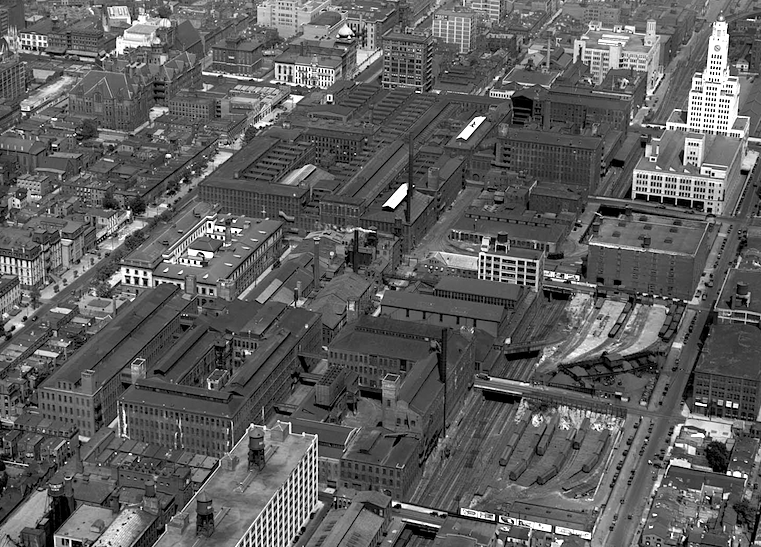
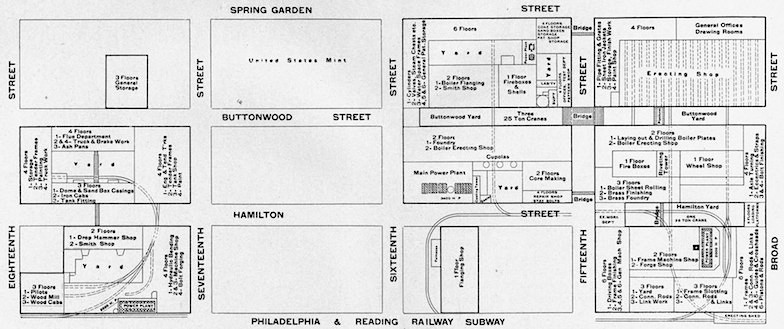
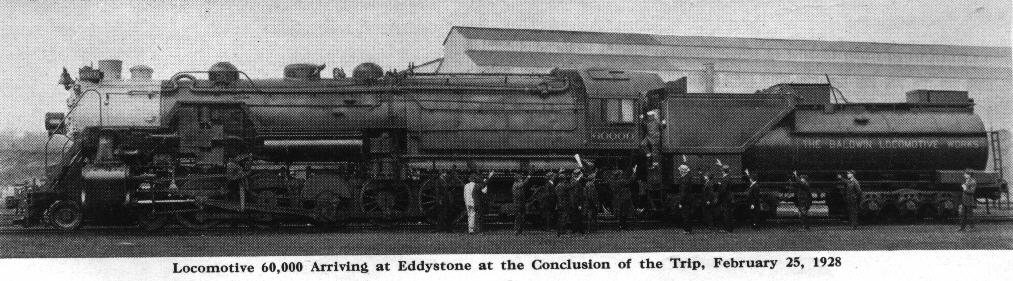
The plant in Phila was closed in July 1928, and where the 60000 was built in early 1928
5d9eb1ba-6bdc-4d54-96e3-9d4ef47292d0.jpg


d80f77d0-ca02-446c-a0f2-4a98a1ca1ecb.jpg


The Eddystone Plant opened the same day in 1928
eddystone.jpg


60000.jpg


fig1.jpg


p2.jpg
 
Last edited:
What is so important about this engine? Plenty of 4-10-2's were built. Just, someone please explain why this engine is amazing. Not trying to be rude.
 
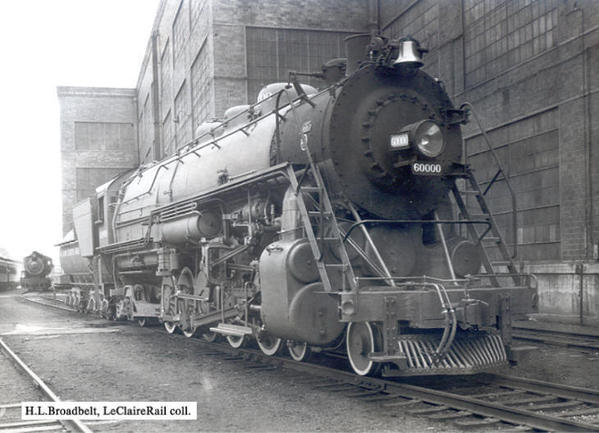
Well the Baldwin 60000 was experimental. It had 3 cylinders, water tube firebox, and it was a compound loco (Look up the definition on wikipedia)
 
What is not so good is that the motion gear and piston rod don't align with the cylinders This is visible right in front of your eyes in the close-up screenshot above. Is this sort of inaccuracy acceptable or normal with lash ups of different creators parts.

PeterPM
 
IM NOT EXPERIENCED WITH MODELING OK? THE ONLY 3D PROGRAM I HAVE IS BLENDER AND EVEN THATS WAY TO CHALLENGING TO CREATE A NEW MESH FROM SCRATCH!
 
Last edited:
Sorry bout that. Id just like some help from people like Steve Lerro or ANL, like i need some experienced modeler to offer me tips about modeling for trainz in blender because i dont have any idea
 
Owen

Perhaps it might be better, if you check your work and don't show it unless it is correct. What you have done is quite OK for your own use, but if you show your work then people will find the errors and that is how you will learn.

I don't know your age, but 14 year olds are producing excellent work from Blender, it is only challenging until you start to learn it, your first box model exported as a mesh will be a mile stone, and the more you do the easier it will become.

By the way, we don't like SHOUTING on the forum. All caps is not acceptable.

PeterPM
 
http://www.44090digitalmodels.co.uk/tutorials/blender1.html

A set of tutorials I have always, and always will, swear by. It's built for 2.49b so there's approximately two places where you might have to figure out what's changed between 2.49b and 2.78c, but overwhelmingly it's the same program, same tools. I worked through all three tutorials in three days, and wound up with an admittedly problematic little test export. Within a month I released my first locomotive from it. And I took the harder route, because doing an engine is a lot tougher than something easy, like, I don't know, a structure or a freight car.
In any case, I certainly wouldn't try to start with something like the 60000. If anything, break yourself in with something like a PRR A3 or the like. (Reference books like the Model Railroader Cyclopedia can furnish the beginner with detailed diagrams, photographs, measurements and good, basic engines that are surprisingly lacking in Trainz, although they ought to be taken with a grain of salt because they sometimes fall subject to egregious errors. You can also find a good variety of simple "starter" engine drawings online, though finding information may be difficult. Just try and tackle a manageable project list, because as I quickly found, unique relics like Mason bogies or massive mainline engines are hardly ideal.
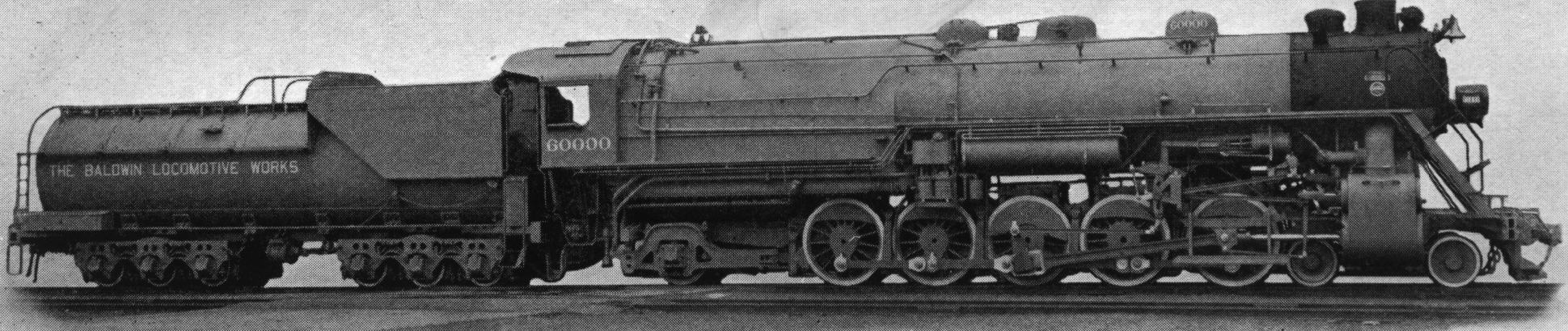
Oh, and one notable piece of information - as with any older American steam builder, Baldwin had a fairly standardized paint scheme, particularly for its demonstrators. The Franklin Institute's black and gold notwithstanding, #60000 would most likely have rolled out of the shops in 1926 in olive green and aluminum, as in photos like this:
p2.jpg

Almost every dark face on the locomotive there would have been green, much like on the restored Baldwin #26. The closest stand-in for the tender font is Bou College, and any of your typical Roman fonts should serve somewhat neatly on the locomotive.

 
I would highly recommend Model Railroader Cyclopedia. Great reference with historical facts and lots and lots of drawings. There are plenty of small switchers at the beginning of the book to choose from, I'd like to try my hand at a UP S class 0-6-0 one day. Plans are in HO scale so you will have to convert it to realscale, all the formulas for size conversion are listed in the book though.

When it comes to modeling it can be tricky. It's taken me nearly 8 years to get to where I am now, and I'm still learning everyday. For modeling programs blender is a good suggestion, I use 3DCrafter, a not so well known program that does feature a lot of train related plugins, like a cab engineer, handrail builder, an easy to use animation tool and plenty of other cool things. It even has a built in Trainz IM exporter as well, so no need to export to different programs first. It will cost you arround $70 to take advantage of these features though.
I like your suggestion Trainboi1 on the PRR A3. Simple and easy to build. Here is the page featuring the A3. I took this photo with my phone but can scan in the blueprints if your interested, or let me know if there is any other locomotives you would be interested in building.

7d5f4525d6274cfb73330ce544dabe14.jpeg
 
It's quite an interesting 3 cylinder locomotive ... I wonder how well it performed, and how many years it ran ?

Quite many experimental locomotives were huge failures, and were mechanical nightmares (much like the Baldwin Centipede below in my signature, it was Always Leaking Coolant and Oil, as were many ALCO's) :cool:
 
Cascade,
The 60000 was actually pretty good, more fuel-efficient and powerful than many of its competitors. Testing against 2-10-2s on the Burlington &c. turned back promising results, and it could reach a respectable 70mph.
As you might imagine, though, the water-tube boiler, Worthington pumps and third cylinder took their toll...at a whopping 350 tons it could only run on the straightest, heaviest tracks. Additionally, as with most water-tube locomotives the tubes had a tendency to burst in the firebox because of the thermal stress, and being fitted with full inside valve gear, it was an absolute bear to maintain. All these meant that no railroad ever bought it or anything like it, and it finished its work for Baldwin in 1928 - a two-year operational life. Eventually Baldwin got $1 from the Franklin Institute to take it off their hands in 1933.
 
@owenamiller its a great reskin, really. I have just never heard of this engine and I was shocked so much people liked a single 4-10-2. But it is a very good reskin. Although, the number on the cab sides should be the same color as the lettering on the tender. Its just my opinion, it really is a good model. Maybe someday, K&L will make that engine.
 
Back
Top